Ph.D. Thesis
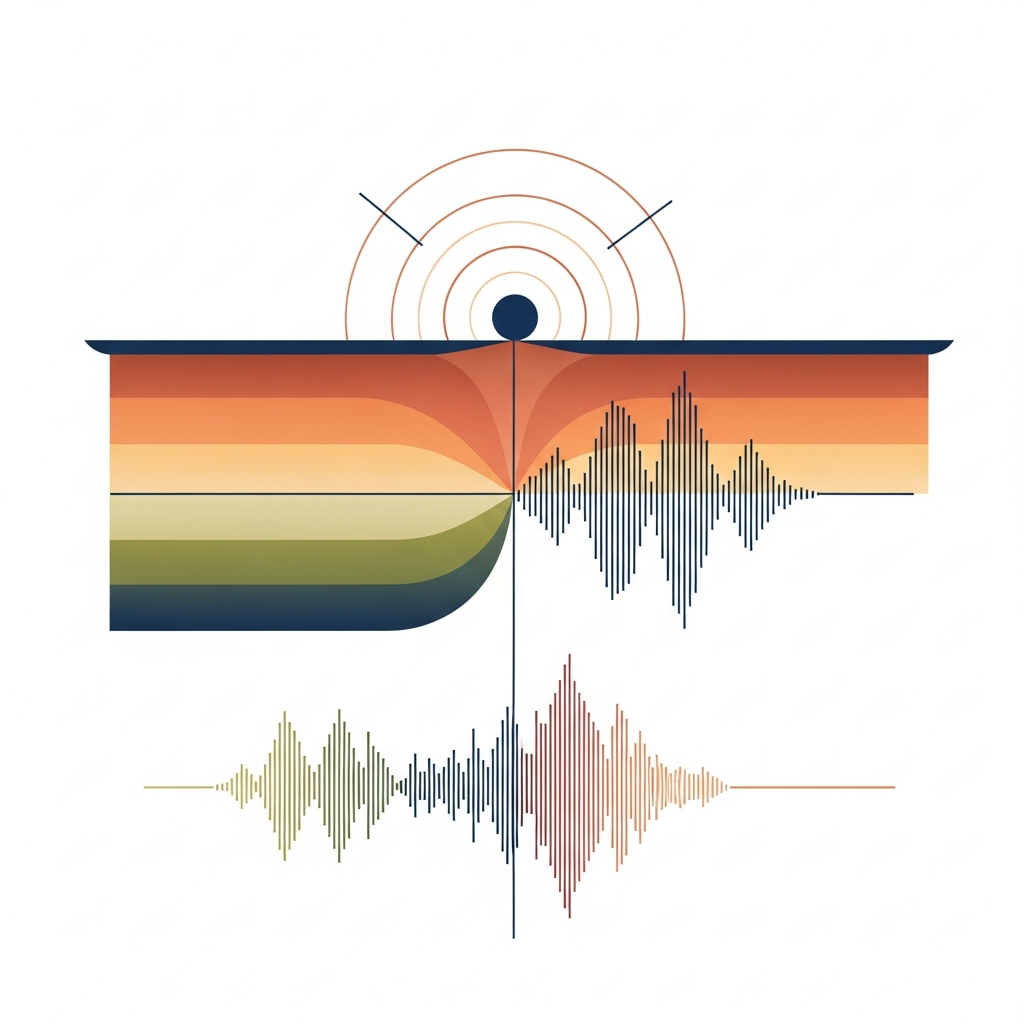
My doctoral research combined machine learning with robust signal processing in low signal-to-noise regimes.
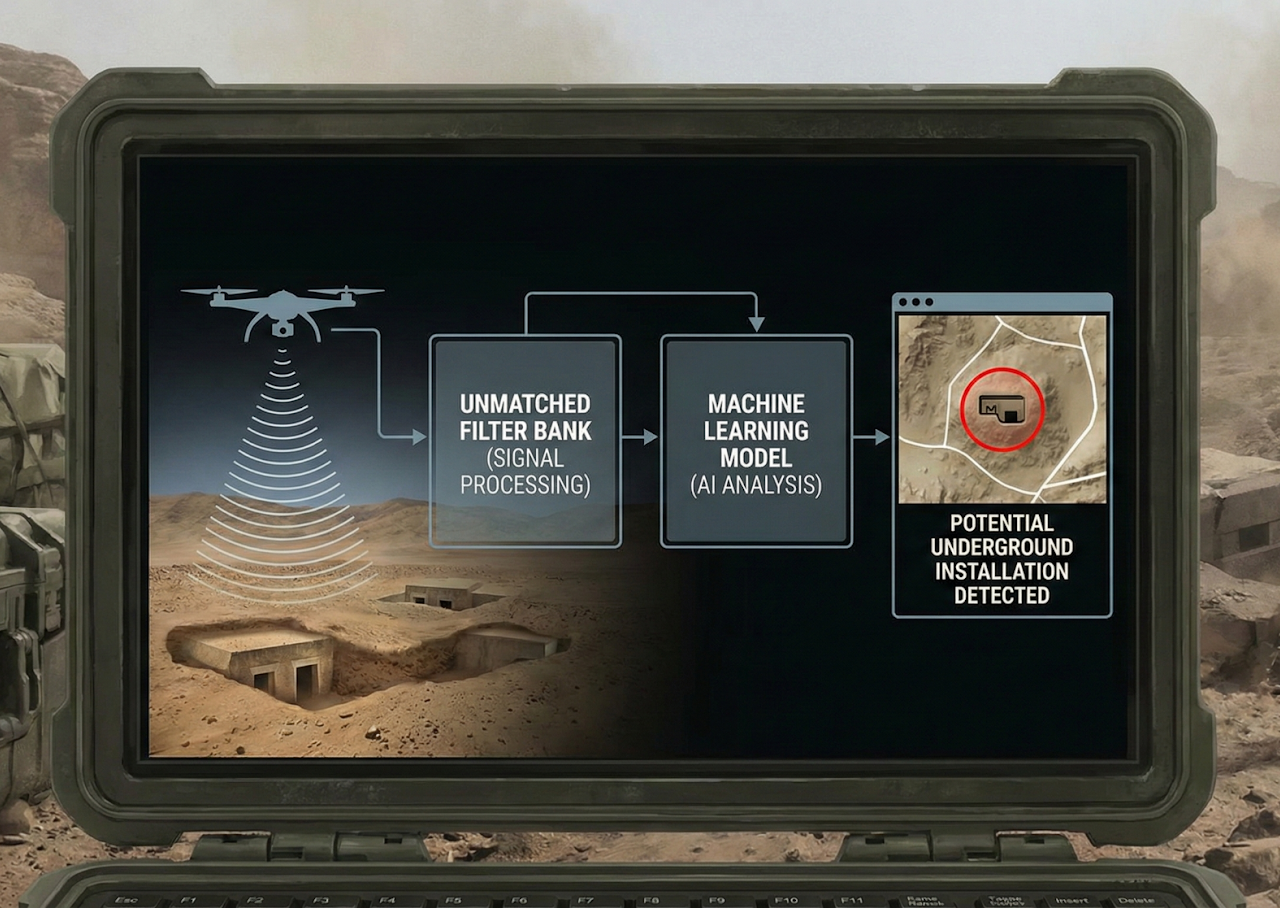
Thesis: Detection of underground installations in hostile environments.
During my PhD studies, I had the privilege of working on a project funded by the U.S. Army Research Office (ARO) and led by my adviser, Prof. Nathan Intrator, together with Nobel laureate Prof. Leon N. Cooper. The project combined machine-learning techniques with a bank of unmatched filters to estimate object distance from time-of-arrival in signal-to-noise-ratio regimes below the classical detection threshold. This approach enabled the use of low-power acoustic pulses to detect underground installations while remaining covert.

Publications Based on the Thesis
-
2008 Journal
A data fusion and multiple ping method for improving the resolution of low-power acoustic and seismic sensing
J. Acoustical Society of America, 124(4)
Combines multiple low-power pings through data fusion to sharpen range resolution in acoustic and seismic sensing. Fusing repeated weak pulses recovers detail that would otherwise demand a single high-power ping, keeping the sensing covert and energy-efficient.
-
2010 Conference
SNR-dependent filtering for Time Of Arrival estimation in high noise
IEEE Workshop on Machine Learning for Signal Processing
Adapts the filtering stage to the local signal-to-noise ratio when estimating a pulse's time of arrival. Tuning the filter to noise conditions keeps arrival-time estimates accurate even far below the classical detection threshold.
-
2011 Conference
Biosonar-inspired source localization in low SNR
Int. Conf. Bio-inspired Systems and Signal Processing
Draws on biological sonar strategies to localize a source under very low signal-to-noise ratios. The bio-inspired design pinpoints targets in regimes where conventional matched filtering breaks down under heavy noise.
-
2012 Journal
Semi-coherent time of arrival estimation using regression
J. Acoustical Society of America, 132(2)
Estimates time of arrival with a semi-coherent regression method that blends coherent and incoherent processing. The regression formulation improves timing accuracy while staying robust to the phase uncertainty of noisy returns.
-
2013 Journal
Time-of-flight estimation in the presence of outliers. Part I: Single echo processing
IEEE Trans. Geoscience and Remote Sensing, 52(6)
Estimates time of flight from a single echo while explicitly rejecting outlier measurements. Handling outliers directly keeps range estimates stable when stray reflections or noise spikes corrupt the signal.
-
2013 Journal
Time-of-flight estimation in the presence of outliers. Part II: Multiple echo processing
IEEE Trans. Geoscience and Remote Sensing, 52(7)
Extends outlier-robust time-of-flight estimation to settings with multiple overlapping echoes. Jointly processing several echoes resolves closely spaced returns that single-echo methods cannot separate.
-
2014 Journal
Energy-Efficient Time-of-Flight Estimation in the Presence of Outliers: A Machine Learning Approach
IEEE J. Selected Topics in Applied Earth Observations, 7(4)
Casts robust, low-power time-of-flight estimation as a machine learning problem. Learning from data reaches accurate ranging with weak pulses, cutting energy use while tolerating outliers.
Award
- 2011: The Don and Sara Maren Foundation award for outstanding achievements in Ph.D. studies.