How to Use AI

AI can do far more than write your code and slides. Its usefulness is almost unlimited, so the real limit is your imagination, not the tool, and the block is usually in your own head. Below are five ways to use it well, each with a good example to copy and a bad one to avoid.

Five ways to use AI well

From how you think about AI to what it now expects of you. Each idea has a good example and a bad one.

1

Invent new ways to use it

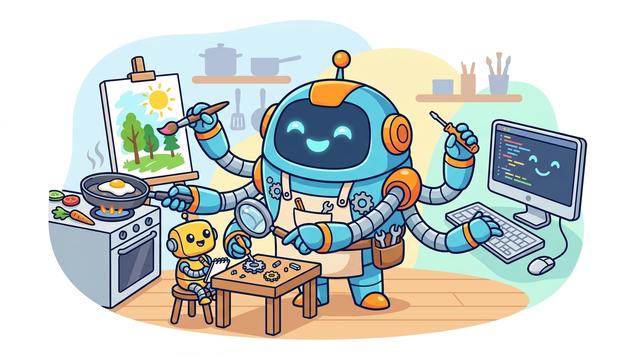
Because AI’s usefulness is almost unlimited, you are almost never using it to its full potential, and the block is usually in your own head. Actively look for new roles for it: a mentor, a reviewer of your work, a source of ideas, a way to find existing projects.

✓ Do thisWhen you’re stuck, you ask “what are three other ways you could help me here?” and try the one you hadn’t thought of, like having it role-play a tough reviewer.
✕ Not thisYou only open AI to generate code or slides and assume that is all it is good for.
2

Generating code and slides is a tiny fraction

Producing artifacts is the smallest part of what AI can do. Use it to think: find similar and existing projects; ask why X works the way it does and how it differs from Y; test your idea’s strong and weak points; ask what to change to make the project excellent; have it ask the questions you might get in your presentation; and let it critique your slides.

✓ Do thisYou paste your idea and ask “what are the strong and weak points, and what should I change to make this excellent?” then “ask me the questions I’ll get during the presentation.”
✕ Not thisYou only ask AI to “write the code” and “make the slides,” and never use it to sharpen the thinking behind them.
3

Take full ownership of the result

It does not matter whether the slides, code, or project idea came from you, a friend, or AI. You are fully responsible for what you submit, and you should be able to explain every line in the deck, every design decision, and every internal detail.

✓ Do thisBefore submitting, you go through each slide and code block and make sure you can justify why it is there and how it works.
✕ Not thisYou hand in AI-generated code you cannot explain and freeze when asked why a function is written the way it is.
4

AI is a utility, like electricity

You are not measured on how much electricity you used to prepare an assignment, and you are not measured on which AI you used or how much of it. Use as much as helps. What is assessed is the result and your understanding of it.

✓ Do thisYou use AI freely wherever it helps and spend your energy on the quality and depth of the final work.
✕ Not thisYou hide that you used AI, or you treat “I used a lot of AI” as if it were an achievement in itself.
5

AI raises the bar, it does not lower it

Because AI makes so much possible, expectations are higher, not lower. You are expected to deliver a real, novel project that is technically and scientifically deep, with several moving parts and genuine design decisions. A single-prompt project no longer impresses an employer and carries no weight in the course.

✓ Do thisYou use AI to reach further, building a substantial system with multiple components and design choices you can defend.
✕ Not thisYou submit something a single prompt could produce and expect it to count as a serious project.