The Honest, Brutal Truth About Learning

Your transcript proves you passed. It does not prove you can do the work, and nobody in the system is in a hurry to tell you the difference. Decide which skills you are actually building, then face the traps that quietly stop you from building them.

The decision, and five hard truths

Choose your skills deliberately, then face why only practice and honest feedback build them.

1

Decide and shape your skillset

Pick the skills you actually want, and write them down: building systems, reading unfamiliar code fast, training and fine-tuning models, running experiments, debugging hard problems, writing, presenting, inventing product concepts. This is one of the biggest decisions of your career. Make it deliberately, from what is in demand and what you enjoy.

The trap: letting a syllabus, an exam format, or whoever happens to grade you pick your skillset by default.

2

Aim for skills, not passive knowledge

Passive knowledge sits locked in your head, hard to use, show, or prove. Skills produce results you can demonstrate. The world rarely cares what you know, only what you can build with it, and an exam is a weak predictor of that.

The trap: "I understand it, I just haven't built it." Two people ace the same exam; only one can ship something that works.

3

The only way to get better is to practice

You improve a skill by doing that exact skill, a lot, not by watching lectures about it. The first attempts will be bad; that is the point. Grab every chance to practice, especially the skills you are weakest at.

The trap: dodging presenting, writing, English, and actually building because they feel uncomfortable, the very reps you need most.

4

School will not tell you how good you really are

The system is not built to tell you honestly how well you have mastered a skill. Hard feedback is unpleasant to give and slow to write, and grades are often inflated and measure canned exam questions, not real work.

The trap: mistaking a good transcript for competence, until an interviewer who has to stake their own name on you finds the gap and rejects you, again with no feedback.

5

Instructors and interviewers see more than they say

After enough years it is obvious what a student actually did, where they cut corners, and where they repeat words they do not understand. Nobody is obliged to call it out, so the illusion survives your studies.

The trap: assuming you talked your way past it. It works in a classroom; it fails on a real team.

6

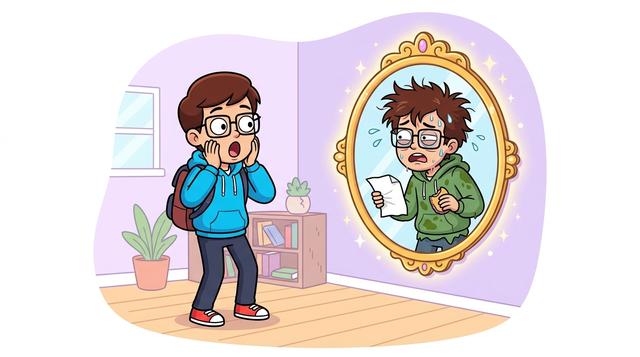
AI, primed correctly, is your honest mirror

AI fixes every problem above, if you prime it to: an endless supply of things to actually build, a tireless partner to drill your weakest skills at any hour, and detailed feedback with none of the social cost that keeps instructors vague. It will say out loud what experienced people only think, naming the gaps instead of letting them slide.

The trap: using it to do the work for you. That just deepens the illusion. Primed to critique you instead, it becomes the honest mirror the rest of the system rarely holds up.